
There is a fine line between a memorable weekend in the backcountry and a grueling slog under an overloaded pack. A 48-hour escape into the wilderness should feel liberating, not like you’re hauling your entire home on your spine.
Packing smart isn’t just about reducing weight—it’s about balance, accessibility, and efficiency. By organizing your backpack logically, you protect your body from strain, save time when setting up camp, and ensure critical safety gear is always within arm’s reach.
Here are the 5 golden rules for packing smart for a weekend adventure in the wild.
1. Master the 4-Zone Packing Strategy
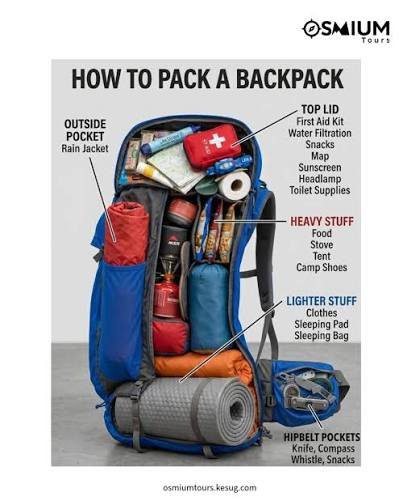
How you place items inside your pack determines your center of gravity. Poor weight distribution forces your shoulders and lower back to work overtime, throwing off your balance on uneven terrain.
- Bottom Zone (Base Layer): Pack light, bulky gear that you won’t need until camp, such as your sleeping bag, sleeping pad, and camp clothing. This creates a stable, padded foundation.
- Core Zone (Middle Back): Place your heaviest equipment—such as your food bag, water reservoir, tent body, and stainless steel cookset—against the back panel closest to your spine. Keeping mass close to your center of gravity prevents the pack from pulling you backward.
- Middle Front Zone: Balance the heavy core items by placing lighter gear like your tent footprint, camp towel, or spare mid-layers toward the outside panel.
- Top Lid & Exterior (Quick Access): Reserve top compartments and hip belt pouches for high-use items: water bottles, headlamp, rain jacket, compass, multi-tool, trail snacks, and your emergency whistle.
2. Ditch the “Just-In-Case” Gear
Overpacking usually stems from fear of the unknown. While safety preparation is vital, packing three extra shirts, multiple heavy books, or duplicate tools creates dead weight that slows you down.
- Apply the 48-Hour Rule: For a 2-day, 2-night trip, you only need the clothes on your back plus one warm insulation layer, a rain shell, and a single set of dry sleep clothes.
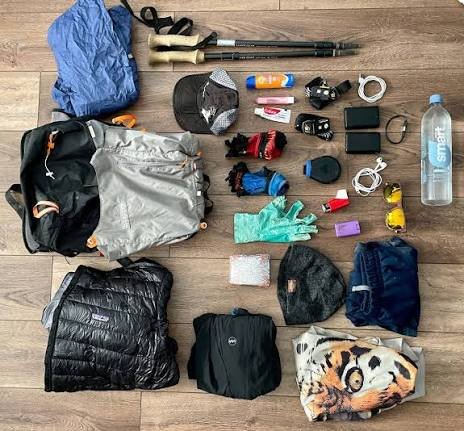
- Audit Every Item: Before zipping your bag, lay all your gear out on the floor. Ask yourself: “Did I use this on my last trip, or is it purely ‘just in case’?” If it doesn’t serve a safety or core utility function, leave it behind.
3. Embrace Modular Stuff Sacks & Dry Bags
Loose gear sliding around inside a backpack creates empty pockets of wasted space and causes erratic weight shifts as you hike.
- Color-Coded Organization: Group similar items together into lightweight stuff sacks or roll-top dry bags (e.g., green for first aid/meds, blue for sleep system, red for kitchen/food).
- Compression Sacks: Use a compression sack for your sleeping bag and insulating outerwear to reduce their volume by up to 50%.
Pro Tip: Always line the interior of your backpack with a heavy-duty pack liner or dry bag before loading stuff sacks. This creates a 100% waterproof barrier against sudden trail downpours.
4. Streamline Your Outdoor Kitchen
Kitchen gear is notorious for adding unnecessary weight and awkward bulk. Focus on multi-use, durable items that collapse or nest together cleanly.
- Choose Nesting Stainless Steel: Opt for a compact stainless steel cookset that houses your micro canister stove, small fuel canister, and folding spork inside its interior cavity.
- Repackage Food: Remove bulky cardboard packaging from meals at home and transfer food into sealed freezer bags. This reduces weight and ensures you don’t carry extra trash into the woods.
5. Keep Trail Essentials Within Instant Reach
There is nothing more frustrating than having to unbuckle and dump out your entire pack on the trail just to find a blister bandage or your sunglasses.
- Hip Belt Pouches: Use these for lip balm, sunscreen, multi-tools, energy bars, and your smartphone or GPS.
- Top Lid (The “Brain”): Keep your first aid kit, headlamp, bug spray, and map/compass in the top compartment so you can grab them in seconds without opening the main bag cavity.
Weekend Packing Zone Breakdown
| Pack Zone | Placement | Gear Items to Store | Why It Belongs There |
| Bottom | Low / Outer Base | Sleeping bag, camp pillow, sleep clothes | Soft foundation, not needed until camp |
| Middle Back | Core / Spine | Stove, food bag, water bladder, cookset | Keeps center of gravity close to body |
| Middle Front | Core / Outer | Lightweight tent body, camp towel, extra clothes | Balances heavy core weight |
| Top Lid | Upper / Exterior | Rain jacket, headlamp, first aid kit, map | Instant access during sudden rain or emergency |
“He who would travel happily must travel light.“
Antoine de Saint-Exupéry
Final Thoughts
Packing smart for the trail is a skill that improves with every trip. By organizing your pack into logical zones and prioritizing multi-functional, durable gear, you’ll walk farther with less strain—leaving you with more energy to enjoy the wilderness around you.